

Big Brown Bat
Eptisicus fuscus
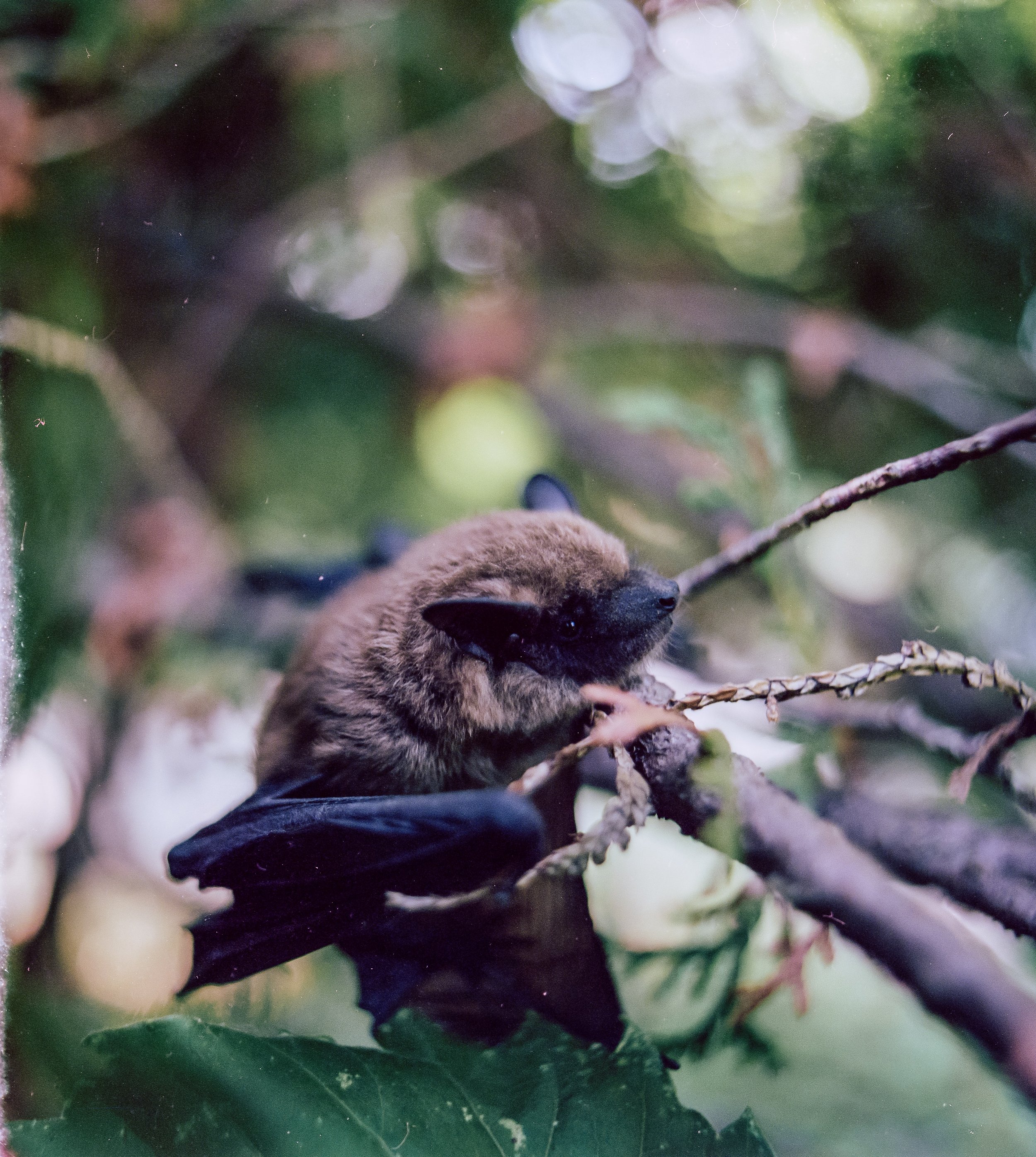
Habitat: Forests, agricultural lands, suburban neighborhoods, cities, and rocky outcrops. Frequently roosts in buildings, barns, bridges, and tree cavities.
Diet: Primarily beetles, moths, flies, and other flying insects.
Maternity Colony Size: Typically 20–300 females, occasionally larger.
Hibernation Colony Size: Usually solitary or in small groups of fewer than 100 individuals.
Species Notes:
The Big Brown Bat is one of the most widespread and adaptable bat species in North America. It is among the largest bats found in the Northeast and is highly tolerant of cold temperatures. During winter, it often hibernates closer to cave entrances than other bat species and can withstand temperature fluctuations that would be unsuitable for more sensitive species.Unlike most northeastern bats, Big Brown Bats frequently roost in buildings and are commonly encountered in urban and suburban environments. They emerge early in the evening to forage and are important natural predators of agricultural and forest pests. Despite their name, adults typically weigh less than one ounce, have a wingspan of approximately 13 inches, and a body length of about 3 inches.