


The Chiroptera Bioacoustics and Ecology Laboratory at Gotham Bat Conservancy uses acoustic technologies to study nocturnal soundscapes throughout North America. Listening in on bats allows us to learn where different species of bats are, what they are doing in these places they are located, and how the presence of human-caused sound may impact their foraging, communication, movement, reproduction, and other essential behaviors for survival.
Current projects in the Lab include building a seasonal occupancy model of bat species in New York City, the Gotham City Project, and studying the impact of industrial activity noise on bat behavior.

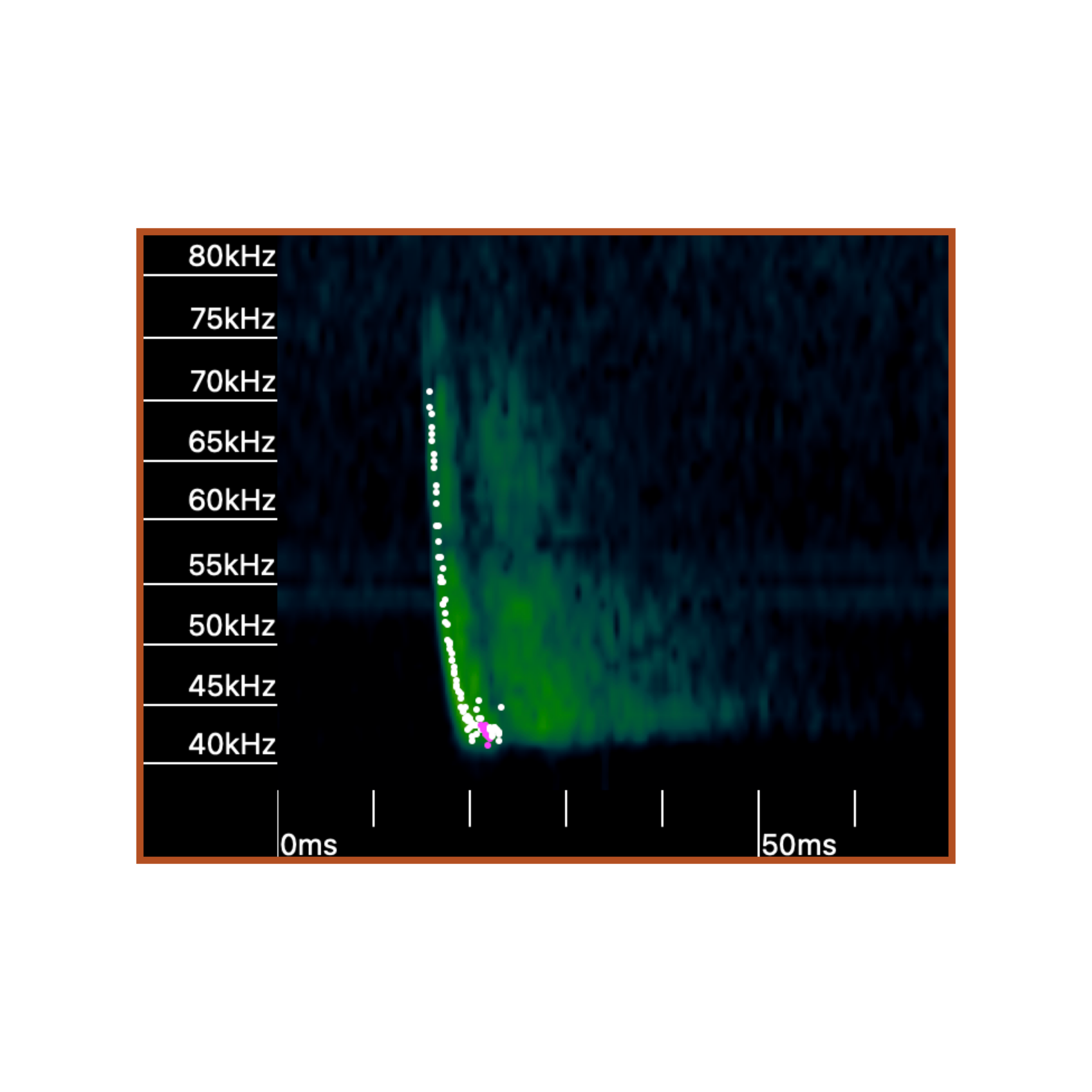
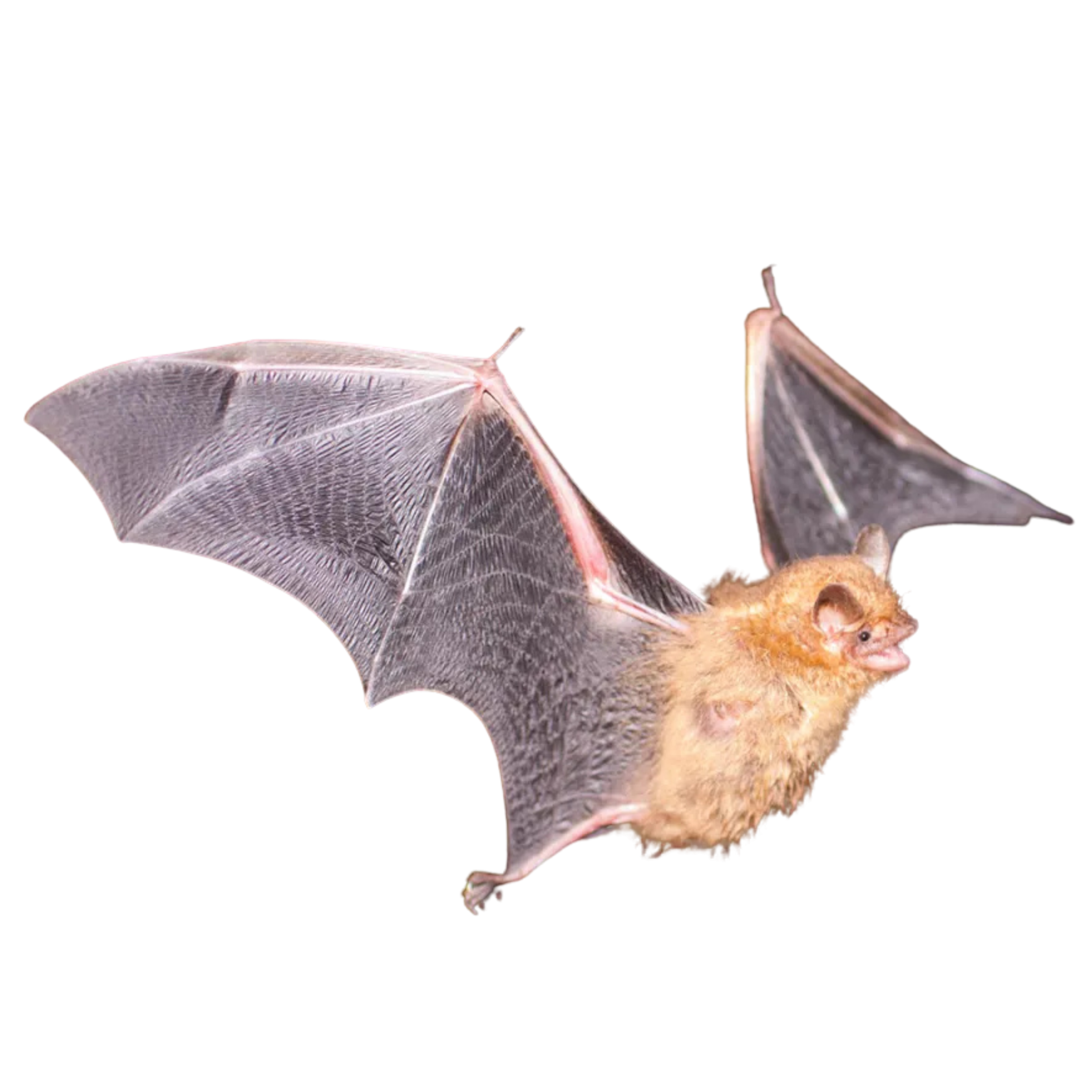


-
Habitat: Forests, agricultural lands, suburban neighborhoods, cities, and rocky outcrops. Frequently roosts in buildings, barns, bridges, and tree cavities.
Diet: Primarily beetles, moths, flies, and other flying insects.
Maternity Colony Size: Typically 20–300 females, occasionally larger.
Hibernation Colony Size: Usually solitary or in small groups of fewer than 100 individuals.
Species Notes:
The Big Brown Bat is one of the most widespread and adaptable bat species in North America. It is among the largest bats found in the Northeast and is highly tolerant of cold temperatures. During winter, it often hibernates closer to cave entrances than other bat species and can withstand temperature fluctuations that would be unsuitable for more sensitive species.Unlike most northeastern bats, Big Brown Bats frequently roost in buildings and are commonly encountered in urban and suburban environments. They emerge early in the evening to forage and are important natural predators of agricultural and forest pests. Despite their name, adults typically weigh less than one ounce, have a wingspan of approximately 13 inches, and a body length of about 3 inches.
-
Habitat: Forests, wetlands, lakeshores, rivers, agricultural areas, and developed landscapes. Summer roosts are commonly found in buildings, tree cavities, beneath loose bark, and rock crevices. During winter, they hibernate in caves and mines.
Diet: Primarily mosquitoes, midges, caddisflies, moths, beetles, and other small flying insects captured over water and along forest edges.
Maternity Colony Size: Typically 50–500 females, though colonies of several thousand individuals were once common.
Hibernation Colony Size: From a few dozen to tens of thousands of bats in suitable caves and mines.
Species Notes:
The Little Brown Bat was once one of the most abundant and widespread bat species in New York State and throughout the Northeast. In summer, females gather in maternity colonies to raise their young, often roosting in attics, barns, and other human-made structures, as well as tree cavities and rock crevices.As a cave-hibernating species, Little Brown Bats spend the winter in caves and abandoned mines where temperatures remain cool and stable. They can live remarkably long lives for such a small mammal, with some individuals surviving more than 30 years in the wild.
Little Brown Bats feed exclusively on insects and play an important role in controlling populations of mosquitoes, beetles, and other night-flying pests. They typically forage over ponds, streams, wetlands, and forest openings using echolocation to locate prey.
Since the arrival of White-nose Syndrome in North America, Little Brown Bat populations have experienced dramatic declines throughout much of their range. Despite these losses, surviving populations continue to persist and reproduce across the Northeast.
Adults weigh approximately 0.29 ounces, have a body length of about 2 inches, and a wingspan of 8–9 inches—only slightly heavier than a quarter.
-
Habitat: Mature and mixed forests, woodlands, riparian corridors, and forested wetlands. During summer, they roost beneath loose bark, in tree cavities, and within cracks and crevices of living and dead trees. In winter, they hibernate in caves and mines.
Diet: Moths, beetles, flies, caddisflies, spiders, and other insects captured within and beneath the forest canopy.
Maternity Colony Size: Typically 10–60 females, occasionally larger.
Hibernation Colony Size: Usually solitary or in small groups of fewer than 100 individuals.
Species Notes:
The Northern Long-eared Bat is a forest specialist known for its unusually large ears, which help it detect prey and navigate through dense vegetation using echolocation. This adaptation allows the species to forage within cluttered forest habitats that are difficult for many other bats to use effectively.Unlike species that forage high above open areas, Northern Long-eared Bats often hunt among trees and along forest edges, sometimes even gleaning insects directly from leaves and branches. During summer, females form small maternity colonies beneath loose bark or within cracks and cavities of trees, where they gather to give birth and raise their young.
As a cave-hibernating species, Northern Long-eared Bats spend the winter in caves and abandoned mines. They are rarely observed during this period and may hibernate individually or in small clusters rather than forming the large aggregations seen in some other bat species.
Northern Long-eared Bats have experienced severe population declines throughout much of their range due to White-nose Syndrome and are now among the most conservation-dependent bat species in the Northeast.
Adults typically have a wingspan of approximately 9 inches, a body length of about 2 inches, and weigh less than half an ounce.
-
Habitat: Deciduous and mixed forests, forest edges, parks, suburban neighborhoods, and wooded riparian corridors. Eastern Red Bats typically roost alone among the leaves of trees, where their fur provides excellent camouflage.
Diet: Moths, beetles, leafhoppers, flies, and other flying insects captured in open areas and along forest edges.
Maternity Colony Size: Solitary. Females do not form maternity colonies and instead raise their pups alone, often giving birth to 1–4 young.
Winter Strategy: Migratory species that travels south for the winter rather than hibernating in caves.
Species Notes:
The Eastern Red Bat is one of the most striking bat species in North America. Males are a vibrant red-orange color, while females are generally paler with grayish tones. Their fur resembles dead leaves, allowing them to remain well hidden while roosting among tree foliage during the day.Unlike cave-hibernating bats, Eastern Red Bats migrate seasonally, moving southward in autumn and returning north during spring. Historically, large numbers were reported migrating together, sometimes visible during daylight hours. Today, such observations are uncommon, and migration typically occurs at night.
Eastern Red Bats are generally solitary throughout much of their lives. Females raise their young alone rather than forming maternity colonies, a trait that distinguishes them from many other northeastern bat species. They forage in open woodlands, forest edges, and suburban habitats, where they consume a variety of night-flying insects.
Among New York's tree-roosting bats, the Eastern Red Bat is considered one of the less frequently encountered species. Like other migratory bats, it faces conservation challenges associated with habitat loss and mortality at utility-scale wind energy facilities.
Adults typically have a wingspan of about 12 inches, a body length of approximately 2 inches, and weigh less than one ounce.
-
Habitat: Mature forests, riparian corridors, floodplain forests, and wooded landscapes. During summer, Indiana Bats roost beneath loose bark and within cracks and crevices of dead or dying trees. In winter, they hibernate in caves and mines with stable temperatures and humidity.
Diet: Moths, beetles, flies, caddisflies, mayflies, and other flying insects captured along forest edges, river corridors, and beneath the forest canopy.
Maternity Colony Size: Typically 50–100 females, though larger colonies can occur in high-quality habitat.
Hibernation Colony Size: Hundreds to tens of thousands of individuals. Large portions of the population may concentrate in only a few important hibernation sites.
Species Notes:
The Indiana Bat is a federally endangered species and one of the Northeast's most conservation-dependent bats. During summer, it forages for insects along forest edges, streams, and beneath the forest canopy, often hunting near the tops of trees where insect activity is abundant.Female Indiana Bats form maternity colonies beneath loose bark and within crevices of dead and dying trees, where they gather to give birth and raise their young. The species relies heavily on large trees and intact forest habitat throughout its summer range.
During winter, Indiana Bats hibernate in caves and abandoned mines. They are particularly sensitive to disturbances during hibernation, as repeated arousals can deplete the fat reserves needed to survive the winter. Historically, human disturbance of hibernation sites contributed to population declines, and more recently, White-nose Syndrome has caused substantial mortality across much of the species' range.
In New York State, approximately half of the known Indiana Bat population hibernates within a single abandoned mine, highlighting the importance of protecting critical hibernation habitat. Because such a large portion of the population is concentrated in relatively few locations, the species remains especially vulnerable to environmental changes and disease.
Adults typically weigh about a quarter of an ounce, have a body length of approximately 2 inches, and a wingspan of around 10 inches.
-
Habitat: Open woodlands, forest edges, wetlands, stream corridors, and areas near ponds and lakes. During summer, Tricolored Bats roost among tree foliage, in rock crevices, beneath loose bark, and occasionally in buildings. In winter, they hibernate in caves and mines.
Diet: Small moths, flies, beetles, mosquitoes, and other flying insects captured in open forest habitats and along waterways.
Maternity Colony Size: Typically fewer than 50 females, often ranging from 5–30 individuals.
Hibernation Colony Size: Usually solitary or dispersed throughout caves, though hundreds may occupy the same hibernation site.
Species Notes:
Also known historically as the Eastern Pipistrelle, the Tricolored Bat is one of the most widely distributed cave-hibernating bat species in New York State. Its common name comes from its distinctive fur, in which each hair contains three bands of color.Unlike many cave bats that cluster tightly together during winter, Tricolored Bats often hibernate alone and prefer warm, humid caves where individuals can remain widely spaced. They are commonly observed hanging openly from cave ceilings and walls rather than squeezing into cracks and crevices.
During summer, Tricolored Bats inhabit open woodlands and areas near water, where they forage for insects along forest edges and above the treetops. They may roost in foliage, rock crevices, tree cavities, and occasionally within buildings. Their slow, fluttering flight is often compared to that of a moth.
The species has experienced severe population declines throughout much of its range due to White-nose Syndrome and is now considered one of the most vulnerable cave-hibernating bats in eastern North America.
Adults have a wingspan of approximately 9 inches, a body length of less than 2 inches, and weigh only a fraction of an ounce, making them one of the smallest bats in the Northeast.
-
Habitat: Rocky slopes, talus fields, cliff faces, ridgelines, open forests, and mountainous terrain. During summer, Eastern Small-footed Bats typically roost in rock crevices, beneath loose stones, along cliff faces, and occasionally beneath bridges or within human-made structures. In winter, they hibernate in caves and mines.
Diet: Moths, beetles, flies, caddisflies, and other small flying insects captured over rocky landscapes, forest openings, and waterways.
Maternity Colony Size: Typically fewer than 30 females, often consisting of only a handful of individuals.
Hibernation Colony Size: Usually solitary or in small groups, though dozens to hundreds may occupy the same hibernation site.
Species Notes:
The Eastern Small-footed Bat is the smallest bat species found in New York State. It is easily recognized by its tiny feet, long fur, and distinctive dark facial mask that gives it a raccoon-like appearance. Despite its wide geographic range, it is among the least frequently encountered bat species during surveys and remains one of the most poorly understood bats in the Northeast.Unlike many bat species that rely heavily on trees or buildings for summer roosting habitat, Eastern Small-footed Bats are strongly associated with rocky environments. They spend much of the summer roosting in cracks and crevices among talus slopes, cliff faces, and other exposed rock formations. They may also use concrete bridges and similar structures that provide suitable crevice habitat.
During winter, Eastern Small-footed Bats hibernate in caves and abandoned mines, often selecting cracks and recesses that may be overlooked during traditional hibernation surveys. In New York State, more than half of the known population is believed to hibernate in just two mines within the Adirondack region, highlighting the importance of protecting these critical sites.
Adults have a wingspan of approximately 9 inches and a body length of less than 2 inches. Weighing only about the same as a nickel, they are among the lightest mammals in North America.
-
Habitat: Forests, woodlands, parks, and open landscapes with scattered trees. Hoary Bats typically roost high in the canopy near the tops of large trees, often concealed among foliage. They are found in habitats ranging from remote wilderness areas to suburban parks and forests.
Diet: Primarily moths, beetles, flies, and other large flying insects captured in open airspace above forests, clearings, and waterways.
Maternity Colony Size: Solitary. Females roost alone and raise their young independently rather than forming maternity colonies.
Winter Strategy: Migratory species that generally winters in the southern United States, Mexico, and other warmer regions. Some individuals have been documented overwintering farther north.
Species Notes:
The Hoary Bat is the largest bat species found in New York State and one of the largest bats in North America. Adults can weigh up to seven times more than some of the smaller bat species found in the Northeast. Their name comes from the frosted, silver-tipped appearance of their fur, which gives them a distinctive "hoary" or grizzled look.Hoary Bats have one of the broadest distributions of any bat in the Americas and have been recorded in every U.S. state except Alaska. They are also the only bat species naturally found in Hawaii. In New York State, the species is most frequently encountered in the Adirondack region, where extensive forest habitat provides suitable roosting and foraging opportunities.
Unlike many bats that forage beneath or along the edges of forests, Hoary Bats often hunt high above the canopy and in open airspace, using their powerful flight to capture large insects. During the day, they typically roost alone near the tops of trees where their fur provides excellent camouflage among leaves and branches.
Hoary Bats are migratory and generally move south during the winter months, though occasional individuals have been documented overwintering as far north as New York and Michigan. Males and females usually occupy different regions during much of the year and typically come together only during the breeding season.
Adults have a wingspan of approximately 15–16 inches, a body length of about 5–6 inches, and are the heaviest bat species regularly found in the Northeast.
-
Habitat: Mature forests, riparian woodlands, and forested wetlands. Silver-haired Bats typically roost in tree cavities, beneath loose bark, and in crevices of large trees, with a preference for deciduous species such as maple, willow, and ash. They may also occasionally use human-made structures.
Diet: Moths, flies, beetles, leafhoppers, and other soft-bodied flying insects captured in forest openings, along waterways, and above the canopy.
Maternity Colony Size: Solitary or very small groups, typically 1–10 females.
Winter Strategy: Migratory species that moves to milder climates in the southern United States for winter.
Species Notes:
The Silver-haired Bat is a medium-sized, migratory tree bat that is strongly associated with mature forest habitat. Historically, it was one of the most commonly encountered bat species in the Adirondack region, but in recent decades it has become much less frequently observed during summer surveys.This species roosts primarily beneath loose bark or within cavities of large trees, often selecting older deciduous trees such as willow, maple, and ash. Because it depends on mature forest structure, it is sensitive to forest fragmentation and the loss of large, cavity-bearing trees.
Silver-haired Bats are among the earliest bats to emerge in the evening, sometimes beginning to forage before sunset. They fly slowly and steadily through forest openings and along waterways, where they capture a variety of flying insects.
Unlike cave-hibernating species, Silver-haired Bats migrate seasonally rather than hibernating in caves. Males and females generally remain separate outside of the breeding season and only come together during migration and mating periods.
Newborn Silver-haired Bats are initially blind and hairless but develop rapidly and gain full sensory abilities soon after birth. Adults may live up to 12 years in the wild, though many face threats during migration, including habitat loss and collision risks associated with human infrastructure.