

Northern Myotis
Myotis septentrionalis
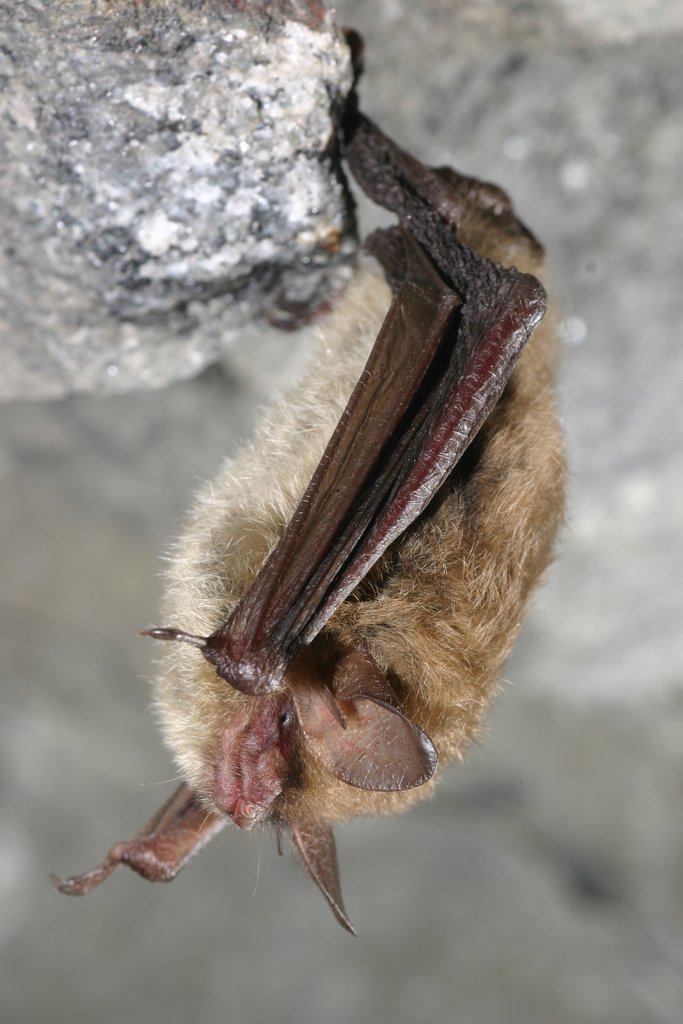
Habitat: Mature and mixed forests, woodlands, riparian corridors, and forested wetlands. During summer, they roost beneath loose bark, in tree cavities, and within cracks and crevices of living and dead trees. In winter, they hibernate in caves and mines.
Diet: Moths, beetles, flies, caddisflies, spiders, and other insects captured within and beneath the forest canopy.
Maternity Colony Size: Typically 10–60 females, occasionally larger.
Hibernation Colony Size: Usually solitary or in small groups of fewer than 100 individuals.
Species Notes:
The Northern Long-eared Bat is a forest specialist known for its unusually large ears, which help it detect prey and navigate through dense vegetation using echolocation. This adaptation allows the species to forage within cluttered forest habitats that are difficult for many other bats to use effectively.Unlike species that forage high above open areas, Northern Long-eared Bats often hunt among trees and along forest edges, sometimes even gleaning insects directly from leaves and branches. During summer, females form small maternity colonies beneath loose bark or within cracks and cavities of trees, where they gather to give birth and raise their young.
As a cave-hibernating species, Northern Long-eared Bats spend the winter in caves and abandoned mines. They are rarely observed during this period and may hibernate individually or in small clusters rather than forming the large aggregations seen in some other bat species.
Northern Long-eared Bats have experienced severe population declines throughout much of their range due to White-nose Syndrome and are now among the most conservation-dependent bat species in the Northeast.
Adults typically have a wingspan of approximately 9 inches, a body length of about 2 inches, and weigh less than half an ounce.